Physical Address
304 North Cardinal St.
Dorchester Center, MA 02124
Physical Address
304 North Cardinal St.
Dorchester Center, MA 02124
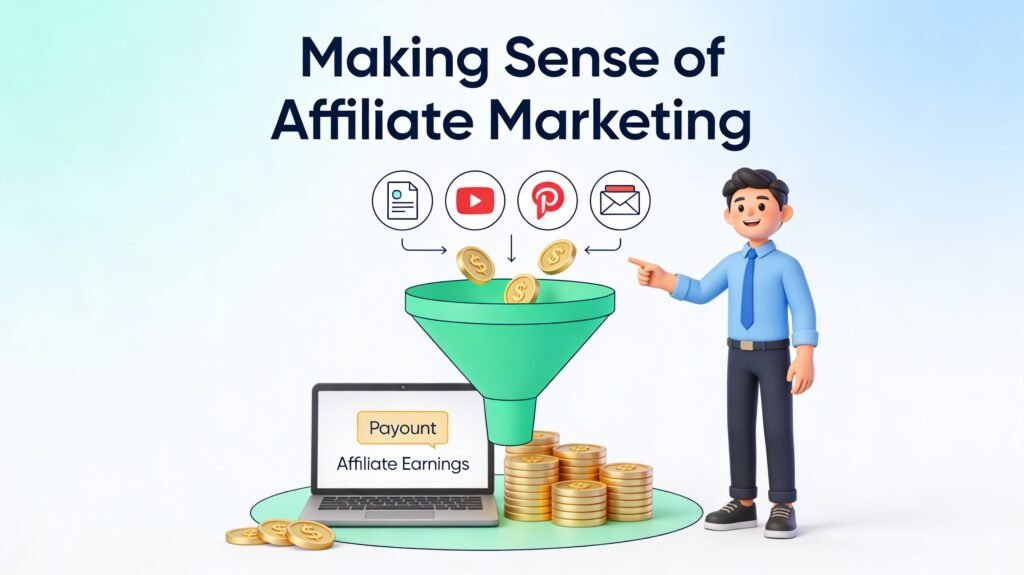
Affiliate marketing is one of the most popular ways to make money online, yet many beginners still feel confused about how it really works. They wonder if it is only for big influencers or think it is too technical to understand. In reality, affiliate marketing is a straightforward business model that can work for bloggers, YouTubers, Pinterest users, email marketers, and even small niche websites with modest but targeted traffic.
At its core, affiliate marketing means you promote another company’s product or service and earn a commission when someone buys through your special tracking link. You are not responsible for creating the product, storing inventory, shipping, or customer support. Your main role is to connect the right audience with the right offer and provide helpful information that makes their buying decision easier. When you treat it like a real business and not just random link sharing, affiliate marketing can become a flexible, scalable income stream.
Getting started has a low barrier to entry. You do not need a huge budget, a warehouse, or a massive following. Often, you can begin with a simple blog, YouTube channel, email list, or social media account. The basic process looks like this: choose a niche, join relevant affiliate programs, receive unique affiliate links, and then create valuable content that naturally includes those links. When a reader or viewer clicks your link and makes a qualifying action, such as a purchase or subscription, the sale is tracked and you earn a commission.
Earnings depend heavily on the type of affiliate program you choose. Many retail programs for physical products pay a smaller one‑time percentage on each sale. In contrast, digital products, software, and subscription services often offer higher commission rates or recurring monthly commissions as long as the customer stays active. This is why many successful affiliate marketers focus on promoting tools, software, educational products, hosting, or financial services that offer stronger payouts and long‑term earning potential.
Content and trust are what separate successful affiliate marketers from those who give up. Simply dropping links on social media rarely works because people only buy when they feel informed and confident. High‑performing affiliate content includes in‑depth product reviews, honest comparisons, step‑by‑step tutorials, case studies, and “best of” guides that answer real questions. Instead of saying “buy this now,” you focus on solving a problem such as choosing the best email marketing tool, comparing website builders, or explaining how to start a blog from scratch.
Search engine optimization (SEO) plays a major role in long‑term affiliate success. When your helpful articles rank on Google for keywords your audience is already searching, that content can bring in consistent traffic for months or even years. Each blog post, video, or optimized page becomes a digital asset that can keep generating clicks and commissions long after it is published. Beyond blogging, platforms like YouTube, Pinterest, and email newsletters also work well for driving traffic to affiliate content when used strategically.
Choosing a focused niche and being transparent with your audience are critical. A clear niche helps you attract people with specific interests and problems, which makes your recommendations more relevant and trustworthy. Always disclose that you use affiliate links, share honest pros and cons, and avoid promoting products you would not recommend to a friend. Building this level of trust takes time, but it is the foundation of sustainable affiliate income.
Affiliate marketing makes sense when you see it as helping people make smarter buying decisions, not just “selling links.” If you commit to one niche, create genuinely useful content, and stay consistent with your traffic strategy, affiliate marketing can grow from a confusing concept into a meaningful online income stream over time.