Physical Address
304 North Cardinal St.
Dorchester Center, MA 02124
Physical Address
304 North Cardinal St.
Dorchester Center, MA 02124
Starting a blog in 2026 feels exciting, but it also comes with a lot of questions. What should you blog about? Do you really need your own website? Can blogging still make money, or is it “too late”? The truth is that blogging doesn’t have to be confusing when you understand a few core principles and focus on creating helpful, people‑first content, which is exactly what Google wants to reward.
At its simplest, a blog is a website (or part of a website) where you regularly publish articles around specific topics. Those posts can be tutorials, personal stories, reviews, or guides, but the most successful blogs focus on helping a clear audience solve real problems. People start blogs for many reasons—building a personal brand, sharing knowledge, attracting clients, or turning their expertise into income through ads, affiliate links, sponsored posts, services, and digital products.
One of the biggest beginner questions is whether you can still make money blogging. The answer is yes, as long as you treat it like a real business. That means choosing a focused niche, publishing consistently helpful articles, building traffic (especially from search), and using multiple monetization methods instead of relying on just one. You don’t have to be a perfect writer to do this. Clear, practical posts that answer real questions almost always outperform fancy writing that ignores what readers actually need.
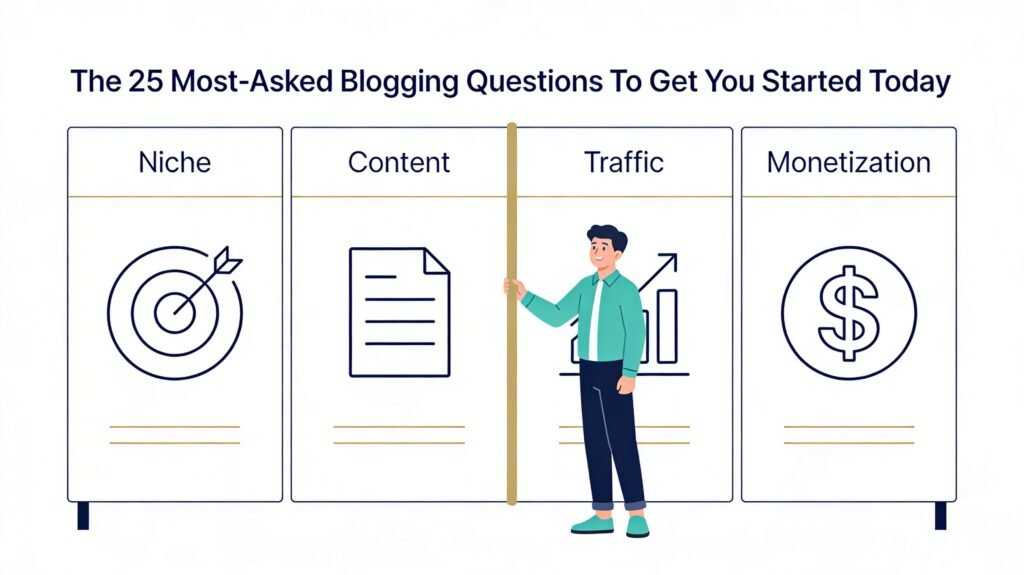
Choosing what to blog about is another common struggle. A strong niche usually sits where your interests, your skills, and market demand overlap. Good blog topics often live in areas where people already spend money, such as personal finance, home décor, fitness, travel, parenting, or digital marketing. Narrowing your niche (for example, “home workouts for busy moms” instead of just “fitness”) makes it easier to stand out and build authority with both readers and search engines.
If you want to build a long‑term, money‑making blog, it’s wise to start your own website with a custom domain. Self‑hosted WordPress is the most common choice because it’s flexible and built for growth. A domain name and hosting do cost money, but they give you control over your brand, layout, SEO, and monetization options. In the beginning, you don’t need complex branding or a fancy logo—a simple, clean design and readable layout are enough while you focus on content.
New bloggers often ask how often they should publish and how long their posts should be. There is no magic rule, but consistency is crucial. Many experts recommend aiming for at least one strong post per week to build a foundation of 30–50 high‑quality articles over time. As for length, your post should be as long as necessary to fully answer the reader’s question. In practice, helpful posts often land between 1,000 and 2,500 words, but the priority is depth and clarity, not hitting an exact number.
Traffic is another big concern. Readers can find your blog through search engines, social platforms, Pinterest, YouTube, email lists, or other sites linking to you. Long‑term, SEO and email are usually the most stable channels. SEO (search engine optimization) means structuring posts with clear headings, intent‑matching titles, relevant keywords, and logical internal links so Google can understand and rank them. It often takes 3–6 months for a new blog to see steady search traffic, so patience and persistence are essential.
Monetization questions are also common: When can you start making money, and how? You can add affiliate links and simple digital products fairly early, once you have a few helpful posts, but meaningful income usually comes after you’ve built trust and traffic. Over time, many bloggers combine display ads, affiliate marketing, sponsored posts, and their own products or services. Building an email list from the start with a useful freebie (like a checklist or mini‑guide) gives you a direct line to readers that isn’t dependent on algorithms.
The final and most important question is often “What should I do first?” The answer is simple: decide on one niche and one specific reader you want to help, then outline your first 5–10 posts that solve their biggest problems. Set up your site, publish your first post, and commit to learning as you go. Every successful blogger once had the same questions you have now. What set them apart was not having all the answers from day one, but taking action, improving their content, and staying consistent long enough to see results.