Physical Address
304 North Cardinal St.
Dorchester Center, MA 02124
Physical Address
304 North Cardinal St.
Dorchester Center, MA 02124
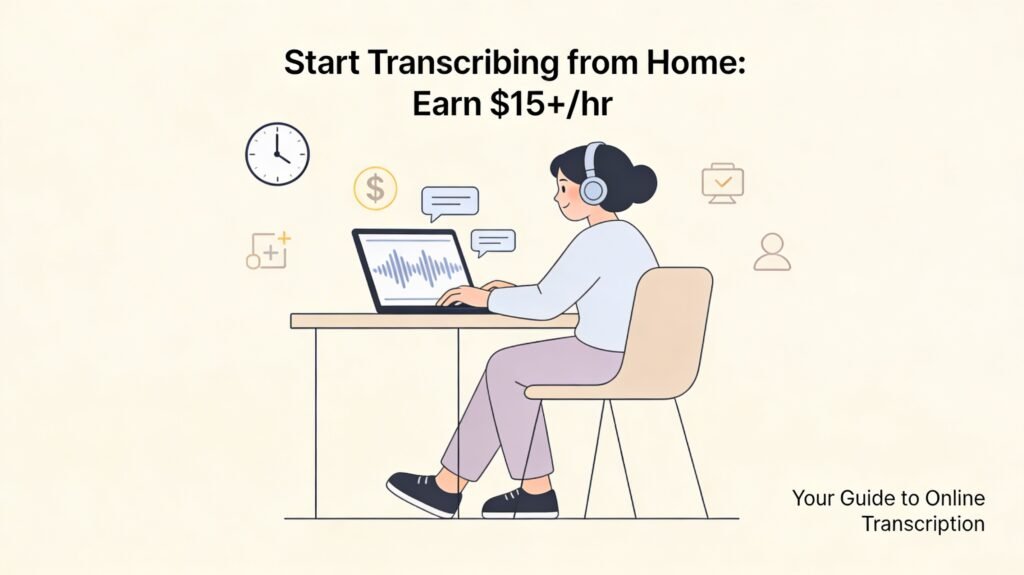
Becoming a transcriptionist from home is one of the most practical ways to start earning online with a flexible schedule. If you are a good listener, type accurately, and pay attention to detail, transcription can become a real work-from-home income stream. You do not need a college degree or a huge startup budget to begin. What you do need is typing speed, strong grammar, patience, and the willingness to improve over time.
A transcriptionist listens to audio or video recordings and turns them into written text. This may include podcasts, interviews, meetings, webinars, YouTube videos, courses, and business calls. Some transcripts are word-for-word, while others are cleaned up for readability. The work sounds simple, but it requires concentration, good listening, and the ability to handle different accents, background noise, and multiple speakers.
To make $15 or more per hour, the most important skill is speed with accuracy. Many beginners focus only on typing fast, but accuracy matters just as much. A transcript full of errors or messy formatting is not useful to clients. Strong punctuation, spelling, and grammar help you look professional and reduce editing time. The better you get at listening carefully and typing cleanly, the more you can increase your real hourly rate.
General transcription is usually the easiest place to start. This includes common content like podcasts, interviews, meetings, and video transcripts. Legal and medical transcription can pay more, but they usually require extra training and specialized vocabulary. For most beginners, general transcription is the fastest path to getting started from home.
The startup cost is low, which is one reason so many people are interested in this work. A reliable computer, stable internet, a quiet place to work, and a good pair of headphones are enough to begin. Some transcriptionists also use foot pedals and transcription software to save time, but those can come later once you are earning consistently.
Before applying for paid jobs, it helps to practice. Use free audio sources like podcasts, public interviews, or YouTube videos to build your skill. Time yourself so you can see how long it takes to transcribe one minute of audio. At first, it may take much longer than expected. That is normal. Over time, your listening, typing, and editing speed will improve. That improvement is what moves you closer to earning $15+ an hour.
A simple portfolio can also help. Even a few well-formatted sample transcripts can show clients that you are serious and capable. Once you feel ready, you can begin with beginner-friendly transcription platforms or small freelance jobs. Early work is useful for building confidence and real experience, but it is important not to stay in very low-paying work for too long.
Reaching $15 or more per hour usually depends on a few key things: improving your typing speed, using good audio equipment, choosing better-paying clients, and avoiding poor-quality audio that slows you down. As you gain experience, you can increase your income even more by working with direct clients or moving into niches like business, technical, or legal transcription.
Transcription is not instant easy money, but it is a real skill that can grow into steady work-from-home income. Start with the basics, practice often, and focus on getting better. That is how transcription becomes more profitable over time.