Physical Address
304 North Cardinal St.
Dorchester Center, MA 02124
Physical Address
304 North Cardinal St.
Dorchester Center, MA 02124
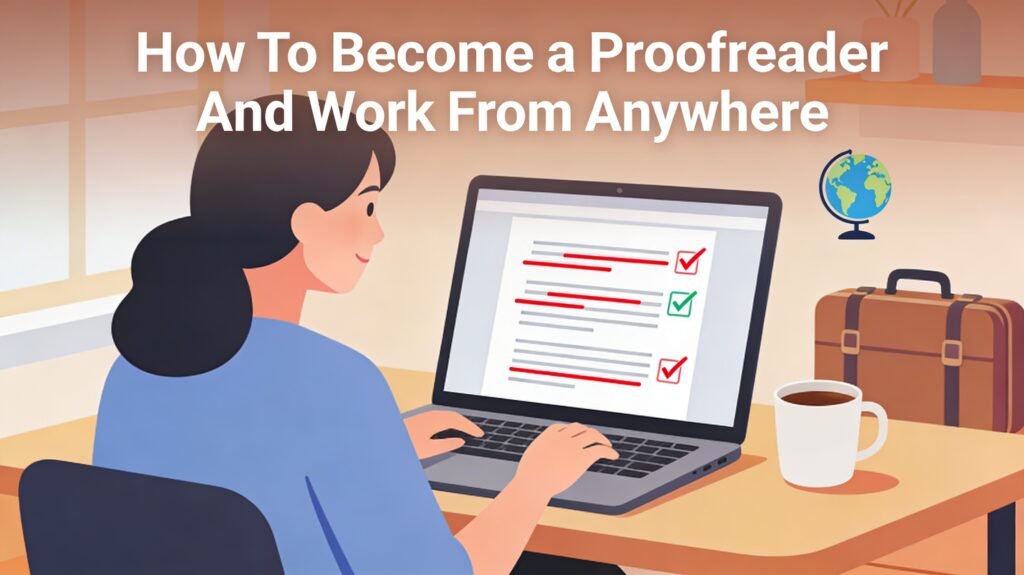
Becoming a proofreader is one of the most flexible ways to earn money online. If you notice spelling mistakes quickly, care about grammar, and enjoy polishing written content, proofreading can become a real work-from-anywhere skill. In 2026, bloggers, businesses, authors, course creators, agencies, and online brands all publish huge amounts of content. That content needs to look clear, professional, and mistake-free. That is why proofreaders are still in demand.
One of the best things about proofreading is how simple it is to start. You do not need a large budget, a formal office, or complicated equipment. In most cases, a laptop, internet connection, and strong language skills are enough. This makes proofreading ideal for people who want flexibility and the freedom to work from home, cafés, or while traveling.
A proofreader’s job is to catch final mistakes before content is published or submitted. This includes spelling errors, punctuation problems, grammar mistakes, repeated words, spacing issues, inconsistent formatting, and small wording errors. Proofreading is different from editing. Editors often rewrite or restructure content, while proofreaders focus on the final cleanup stage. Your role is to make sure the writing looks polished and accurate, not to rewrite everything.
General proofreading is usually the easiest place to start. This includes blog posts, web pages, emails, business documents, and simple digital content. Over time, you can specialize in areas like academic proofreading, book proofreading, technical writing, or business content. Specializing can help you earn more because clients often pay better for someone who understands their type of writing.
To succeed, you need more than just “good English.” Strong grammar, punctuation, and attention to detail are essential. You also need focus, patience, and good judgment. A proofreader must know when something is truly wrong, when it is just a style choice, and when to follow the client’s preferences. Learning common style guides and consistency rules can also make you more useful and professional.
Practice is one of the fastest ways to improve. You can proofread blog posts, articles, newsletters, or even your own writing. Look for small details like inconsistent punctuation, repeated words, incorrect capitalization, and formatting issues. As you improve, create a few sample documents showing before-and-after corrections. These can act as portfolio pieces when you start looking for work.
Finding clients usually starts with small projects. Many beginner proofreaders work with bloggers, small business owners, students, self-publishing authors, and online creators. You can find work through freelance platforms, online job boards, creator groups, writing communities, or direct outreach. A simple online presence, such as a portfolio page or clear freelance profile, can help clients understand what you offer.
Proofreading fits remote work especially well because much of it is deadline-based rather than meeting-based. That means you can often organize your work around your own schedule. Over time, you can grow by getting repeat clients, charging better rates, specializing in a niche, or adding related services like light editing.
Becoming a proofreader and working from anywhere is absolutely possible. Start with the basics, practice often, build a few strong samples, and focus on being accurate, reliable, and professional. That is how a simple proofreading skill can grow into a real source of flexible online income.