Physical Address
304 North Cardinal St.
Dorchester Center, MA 02124
Physical Address
304 North Cardinal St.
Dorchester Center, MA 02124


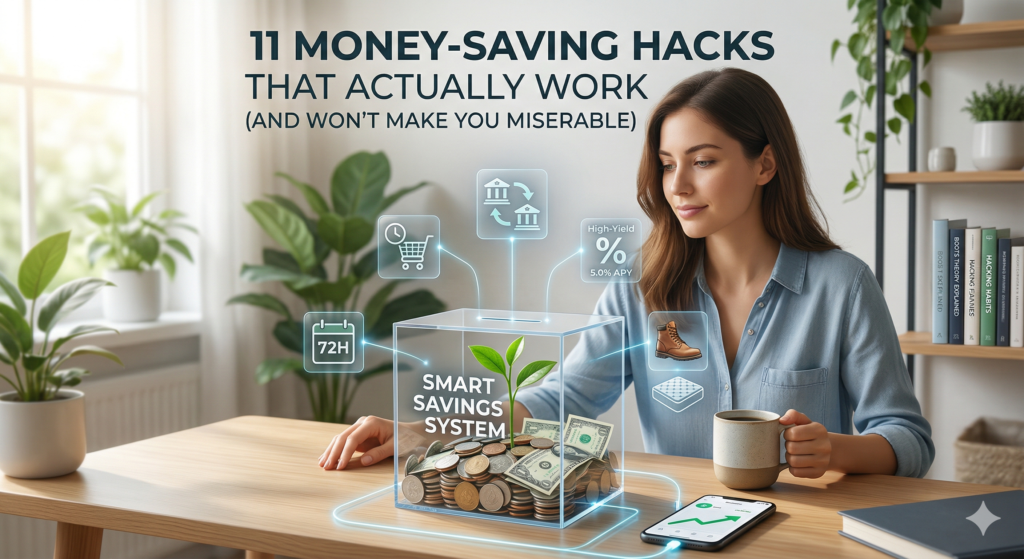
Let’s get one thing straight: the traditional financial advice of “cancel your Netflix and stop buying lattes” is tired, outdated, and frankly a little insulting. In 2026, the cost of living requires more than skipping your morning coffee. Trying to save money through sheer willpower and extreme deprivation only leads to financial burnout. Real, sustainable wealth-building is about outsmarting your impulses and optimizing your habits. Here are 11 highly practical money-saving systems that actually work.
1. The 72-Hour Cart Rule When shopping online for non-essentials, add items to your cart, close the tab, and wait exactly 72 hours. This forced cooling-off period lets the emotional high fade. If you still genuinely need it three days later, buy it. Otherwise, you’ve just saved yourself from an impulse buy.
2. Unlink Your Credit Cards The easier it is to pay, the more you spend. Delete your saved credit card information from your browser and retail apps. Forcing yourself to stand up, find your wallet, and manually type those 16 digits adds enough physical friction to stop mindless spending dead in its tracks.
3. Use Curbside Grocery Pickup Supermarkets are meticulously engineered to make you buy things not on your list. By ordering via a curbside pickup app, you stick strictly to your planned groceries and can watch your total tally up before checking out, entirely avoiding the temptation of the snack aisle.
4. Frame Prices in “Hours Worked” If your take-home pay is $20 an hour, a $120 jacket doesn’t just cost money—it costs six hours of your life. Reframing abstract price tags into tangible hours worked is a brutal but highly effective way to evaluate if a purchase is truly worth it.
5. The “One In, One Out” Rule To combat lifestyle creep, adopt a strict policy for non-consumable goods: if you buy a new pair of shoes, an old pair must be donated or sold. This forces you to evaluate if you want the new item enough to part with something else.
6. Automate “Pay Yourself First” If you wait until the end of the month to save, you will save nothing. Set up an automatic transfer so that the exact morning your paycheck hits, a specific percentage is instantly routed to a separate savings account.
7. Audit “Ghost” Subscriptions Set a calendar reminder every quarter to review your bank statements. Ruthlessly cancel any streaming service, app, or software you haven’t actively used in the last 30 days. You can always resubscribe later if you genuinely miss it.
8. Gamify With “No-Spend” Days Challenge yourself to two days a week where you spend absolutely nothing outside of automated bills. Eat the food already in your fridge and find free entertainment. It breaks the daily habit of casually swiping your card.
9. Buy Quality (The Boots Theory) It is incredibly expensive to be cheap. Stop buying $20 items that fall apart in six months. Save up for high-quality staples—like winter coats or mattresses—that last a decade. You will spend significantly less over the long term.
10. Negotiate Your Bills Annually Corporate loyalty does not pay. Call your internet, phone, and insurance providers once a year, mention a competitor’s promotional rate, and ask for the retention department to secure a loyalty discount.
11. Use a High-Yield Savings Account (HYSA) Keeping an emergency fund in a traditional brick-and-mortar bank earns you pennies. Move your cash to an online HYSA earning 4% to 5% APY so your money outpaces inflation and literally earns hundreds of dollars a year in passive income.
You don’t need a spreadsheet with 40 tabs to take control of your finances. By automating your best behaviors and creating friction around your worst habits, you can completely change your financial trajectory without stripping the joy from your daily life.