Physical Address
304 North Cardinal St.
Dorchester Center, MA 02124
Physical Address
304 North Cardinal St.
Dorchester Center, MA 02124
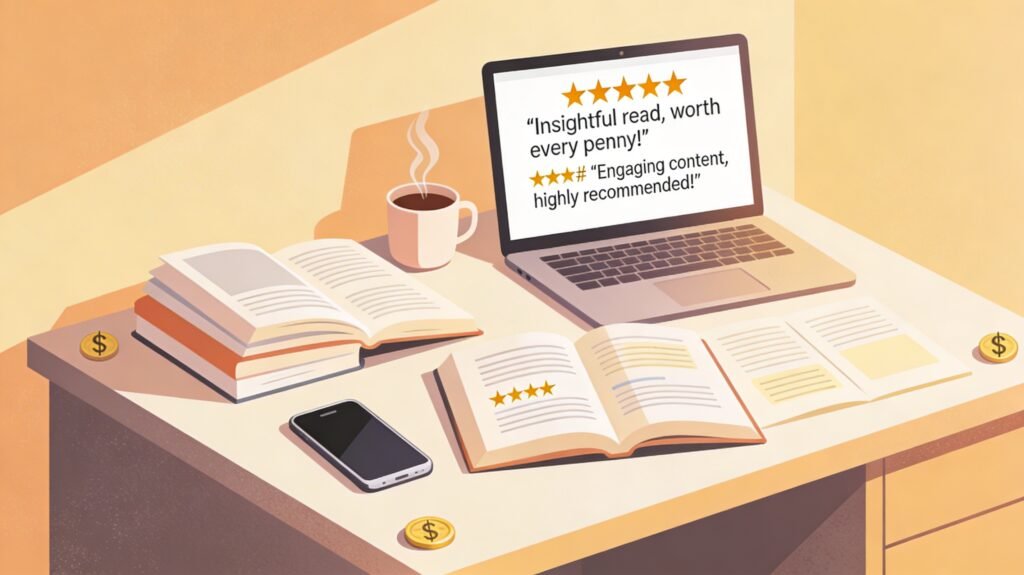
Paid book reviews are a real, ethical way to earn money for thoughtful, honest feedback on books, but they work more like freelance writing than quick cash or guaranteed five‑star praise. To succeed and rank well on Google, you need to understand how paid reviewing works, build a credible reviewer profile, and consistently write original, helpful reviews that both readers and publishers trust.
When a site pays for a book review, it is paying for your time, critical thinking, and writing skills, not for a positive rating. Most reputable platforms expect you to read the entire book, follow specific guidelines, and submit a clear, spoiler‑light review by a deadline. A standard review includes a short summary, what worked and what did not, who the book is best for, and a fair recommendation based on your experience as a reader.
Payment structures vary: some companies pay a flat fee per review, others combine free books with small payouts or reader tips. Rates usually start in the 5–25 dollar range for beginners and can climb higher as you build experience, credibility, and a track record of on‑time, high‑quality reviews. In some cases you are paid in advance copies (ARCs) rather than cash, which still has value if you love reading and want early access to new titles.
Before applying anywhere, it helps to set up a simple online presence that proves you are a serious reader who can deliver original, honest reviews. This can be a small book blog, a dedicated Instagram or TikTok for reading, or a well‑maintained Goodreads profile where you regularly post clear, balanced reviews. Aim for reviews that highlight strengths and weaknesses, avoid heavy spoilers, and explain what kind of reader will enjoy the book.
Creating 2–3 polished sample reviews of 300–600 words gives you a mini‑portfolio you can attach to applications and pitches. These samples show your tone, your ability to summarize, and your skill in offering constructive criticism instead of vague opinions. Over time, consistent posting on your own channels also signals reliability to publishers and review platforms that might search your name.
Several legitimate websites and publishers pay readers to review books, often with different expectations, genres, and pay scales. Here are some well‑known options readers often explore:
Not every platform will accept you right away, so it helps to think of this as an ongoing freelance hunt rather than a one‑click application. Applying to a mix of beginner‑friendly sites and more professional outlets lets you earn while slowly moving into higher‑paying work.
Each platform has its own rules about review length, tone, and turnaround time, and following these closely is the fastest way to keep getting new assignments. Some editors want short, punchy 200‑word reviews, while others commission deep 750‑word critiques with more context and analysis. Either way, they expect original writing, no plagiarism, and honest opinions that respect both readers and authors.
To stand out, you need strong reading comprehension, clear writing, critical thinking, and reliable time management so you can meet every deadline. Income ranges widely: many reviewers start with free books or low‑paying gigs but can grow into better rates by building a portfolio, choosing specific genres, and combining paid reviews with blogging, affiliate links, and social media content. For book lovers who enjoy sharing opinions, paid reviews can become a steady side hustle and a foundation for a broader online book business over time.