Physical Address
304 North Cardinal St.
Dorchester Center, MA 02124
Physical Address
304 North Cardinal St.
Dorchester Center, MA 02124

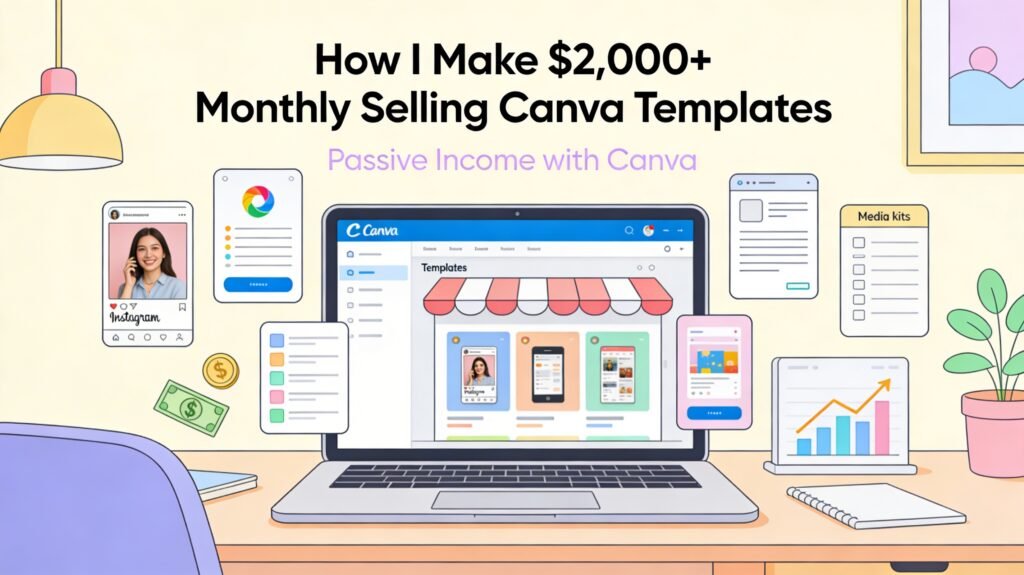
How I Make $2,000+ Monthly Selling Canva Templates
Selling Canva templates has become one of the most profitable and beginner‑friendly digital side hustles I’ve ever tried. With almost no startup costs and the ability to sell the same design over and over again, this small experiment has turned into a steady income stream that now brings in more than 2,000 dollars per month. Instead of packing orders or managing inventory, I create a template once, upload it to my shop, and it keeps earning whenever someone buys and downloads it.
Why Canva Templates Are So Powerful
Canva is used by millions of people who need designs but do not want to start from a blank page every time. Busy small business owners, content creators, influencers, and job seekers are happy to pay for ready‑made templates they can open, edit, and customize in minutes. That demand creates a big opportunity: I design useful, attractive templates, and my customers save time and stress by using them. Because these are digital files, there is no shipping, no stock to hold, and no production cost every time I make a sale, which means most of the income is profit after the initial work is done.
Choosing a Profitable Canva Template Niche
The turning point for my income was choosing a clear niche instead of making random designs for everyone. I started by focusing on specific groups like small business owners, content creators, Etsy sellers, and job seekers who all need templates for marketing, branding, or professional documents. For example, I create Instagram post bundles, Pinterest pin sets, media kits, digital planners, resume templates, and product listing templates that solve very specific problems. When your templates are built for one type of customer and one purpose, they feel more “custom” and sell much better than generic designs.
My Simple Design Process Inside Canva
I create almost everything directly inside Canva, using a consistent style so my products look polished and cohesive. First, I plan a full bundle on paper—how many pages or posts, what each slide or graphic is for, and what result it should help the buyer get. Then I choose fonts, colors, and layouts that fit my niche and build a base design that I can duplicate and adjust across the whole pack. When the template set is ready, I generate a Canva “template link” and place it inside a PDF instruction file that explains how to access and edit the design. This PDF is the digital download customers receive, and it allows me to deliver the same product automatically to every buyer without extra work.
Where I Sell My Canva Templates
To reach 2,000+ dollars per month, I sell my templates on more than one platform instead of depending on a single shop. I use marketplaces like Etsy and Creative Market for built‑in search traffic, and I also sell through my own website or blog where I have more control over branding and pricing. On marketplaces, I focus on keyword‑rich titles, detailed descriptions, and attractive mockup images that show exactly what buyers are getting. On my own site, I write helpful blog posts around topics like social media marketing or small business branding and naturally link to my template bundles as ready‑to‑use solutions.
Bundles, Pricing, and Hitting $2,000+ Months
A big part of reaching 2,000+ per month comes from how I structure and price my products. Instead of selling only single templates for a few dollars, I offer bundles of 20–50 matching templates that give buyers more value and allow me to charge higher prices. For example, a single template might cost around 5–10 dollars, while a full bundle can be priced between 25 and 50 dollars or more, especially if it replaces a lot of someone’s design work. This raises my average order value so I do not need thousands of customers; even 50–80 well‑priced sales a month can add up to 2,000 dollars or more in revenue.
Getting Consistent Traffic and Customers
Even the best templates will not sell without people seeing them, so I treat traffic as a priority. I use SEO on marketplaces by including clear phrases like “Instagram Canva template bundle for small businesses” or “editable resume template Canva” in my titles and tags, which helps my listings show up in search results. I also use Pinterest, TikTok, and Instagram to share mockups, quick customization demos, and before‑and‑after examples that link back to my shop. Over time, this mix of search traffic, social media, and occasional blog visitors creates a steady flow of buyers so my templates can continue selling every day without me constantly promoting them.
Scaling Canva Templates Into Long‑Term Income
My income did not jump to 2,000 dollars overnight; it grew as I added more products, improved my best‑selling designs, and listened to customer feedback. I regularly update older listings, create new bundles based on what sells well, and repurpose successful layouts into fresh products for similar niches. Because each template is a digital asset that can sell hundreds of times, every new product I add increases my potential monthly income without increasing my workload in the same way a physical business would. This is what makes selling Canva templates such a powerful long‑term income stream for anyone who enjoys design and wants flexible, scalable online earnings.