Physical Address
304 North Cardinal St.
Dorchester Center, MA 02124
Physical Address
304 North Cardinal St.
Dorchester Center, MA 02124
Becoming a bookkeeper with no experience is one of the most practical ways to start a flexible and reliable career. Every business needs help tracking income, expenses, invoices, and financial records, which means bookkeeping stays in demand. The best part is that you do not need an accounting degree or years of experience to begin. With the right approach, you can learn the basics, practice your skills, and start working with clients or employers step by step.
A bookkeeper records and organizes a business’s daily financial activity. This includes sales, expenses, bills, receipts, payroll, and bank transactions. While accountants usually focus on taxes and financial strategy, bookkeepers handle the day-to-day records that keep a business organized. That makes bookkeeping a more beginner-friendly entry point into the financial world.
The first step is understanding the core concepts. Learn the difference between income and expenses, assets and liabilities, and how profit and loss works. You should also understand how bank reconciliation works and why accurate records matter. These terms may seem confusing at first, but once you study them in simple examples, they become easier to manage.
Next, learn the basics through free or low-cost resources. YouTube videos, blogs, and beginner bookkeeping courses can help you build a strong foundation. It is also important to get comfortable with popular bookkeeping software such as QuickBooks, Xero, or Wave. You do not need to learn everything at once. Start with simple tasks like entering transactions, categorizing expenses, creating invoices, and reviewing reports.
After that, practice as much as possible. You can create a fictional business and record sample transactions to build experience. Many bookkeeping tools also offer demo accounts where you can test features without using real client data. Practice helps turn theory into real skill, and it builds confidence quickly.
Another smart move is choosing a niche. Some bookkeepers work with local stores, while others serve online businesses, freelancers, or ecommerce brands. Picking a niche can help you market yourself more clearly and understand your clients better. For example, if you know online selling, you may choose to work with Shopify stores or small digital businesses.
Even without paid experience, you can create a simple portfolio. Include sample reports, mock bookkeeping work, software certificates, or a short description of the services you offer. This shows potential clients or employers that you understand the process and take the work seriously.
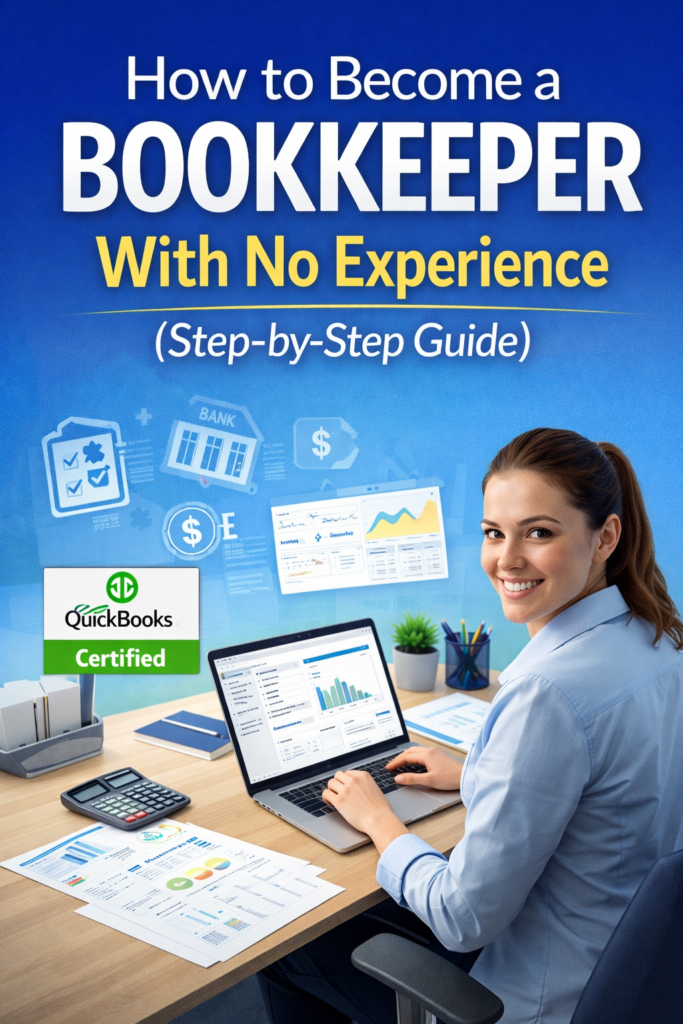
Certification is optional, but it can improve your credibility. A QuickBooks certification or beginner bookkeeping course can help you stand out, especially when applying for remote jobs or freelance work. Once you have the basics, start small. Help a friend, volunteer for a local group, or apply for entry-level bookkeeping roles.
The key is to focus on being organized, accurate, and dependable. Over time, you can improve your skills, gain experience, and raise your rates. Bookkeeping can be a strong career path for anyone who wants steady demand, flexible work, and long-term growth. With patience and practice, you can become a bookkeeper even if you are starting from zero.