Physical Address
304 North Cardinal St.
Dorchester Center, MA 02124
Physical Address
304 North Cardinal St.
Dorchester Center, MA 02124

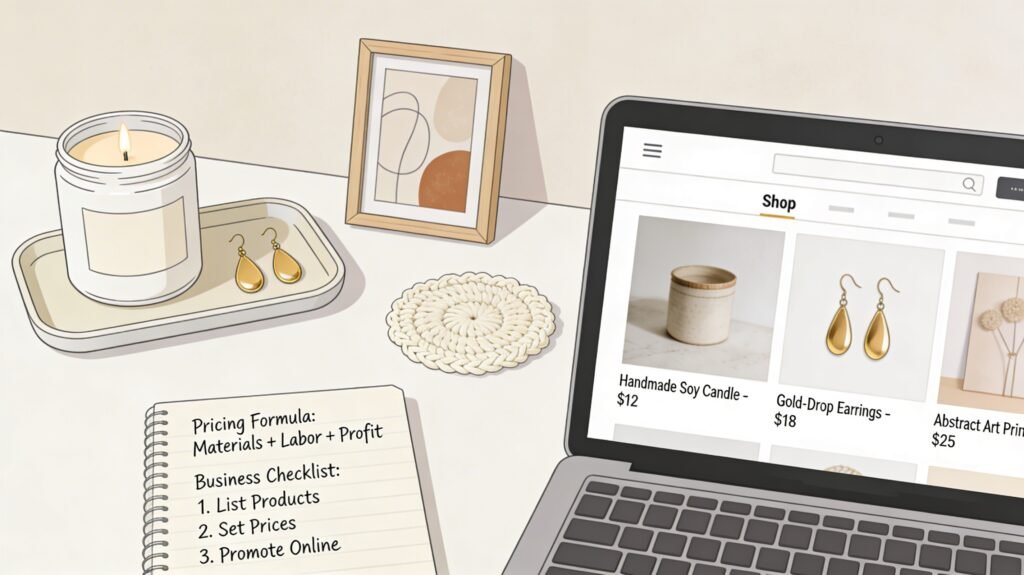
Turning your craft into real income starts with choosing products people actually want, pricing for profit, and selling on platforms where buyers are already looking for handmade goods. By treating your creativity like a small business—testing ideas, building a brand, and using multiple income streams—you can grow from hobby crafter to consistent earner.
Handmade products feel personal, unique, and meaningful, which is why many buyers are happy to pay more than they would for mass‑produced items. With so many niches—weddings, home decor, gifts, fashion, pets, self‑care, and more—it is possible to specialize in a style or customer group and become the go‑to maker in that space. When you combine creativity with basic business habits, your crafting can grow into a recognizable brand instead of just a casual pastime.
The most successful crafters focus on items that are enjoyable to make, quick to produce, and already in demand. Think smaller, easy‑to‑ship products like jewelry, candles, soaps, art prints, wall decor, and personalized gifts that buyers already search for on marketplaces and social media. Narrowing your niche—such as minimalist home decor, boho wedding accessories, or custom pet gifts—helps customers instantly understand what you sell and why it is for them.
Online marketplaces like Etsy, Amazon Handmade, and eBay give you instant access to buyers who are actively looking for handmade and custom items. As you grow, launching your own website creates more control over branding, pricing, and customer relationships while reducing marketplace fees. Social platforms such as Instagram, TikTok, Pinterest, and Facebook are powerful for showing behind‑the‑scenes videos, packaging clips, and tutorials that drive traffic and sales. Offline, craft fairs and local markets let you meet customers face to face, test prices, and see what people actually pick up and buy.
Many new crafters undercharge because they are worried no one will buy, but that approach makes it hard to earn a sustainable income. Your prices should cover materials, packaging, platform fees, booth costs, and your time, with enough margin to pay you as a business owner. A simple starting point is to calculate your total cost per item, then add a healthy markup and adjust over time based on demand and competitor research. Remember that good branding and professional presentation can justify higher prices because they increase the perceived value of your handmade work.
You do not have to rely on product sales alone to make money as a crafter. Many makers add digital products like patterns, SVG files, and printable templates, which can be sold repeatedly with no extra material cost. Teaching workshops or online classes turns your skills into another income source and recorded lessons can create ongoing passive income. A blog, YouTube channel, or social media account can eventually earn from ads, sponsorships, and affiliate links, giving you long‑term revenue beyond each individual sale.