Physical Address
304 North Cardinal St.
Dorchester Center, MA 02124
Physical Address
304 North Cardinal St.
Dorchester Center, MA 02124
How I Traveled the World on a Student Budget (Without Missing Out)
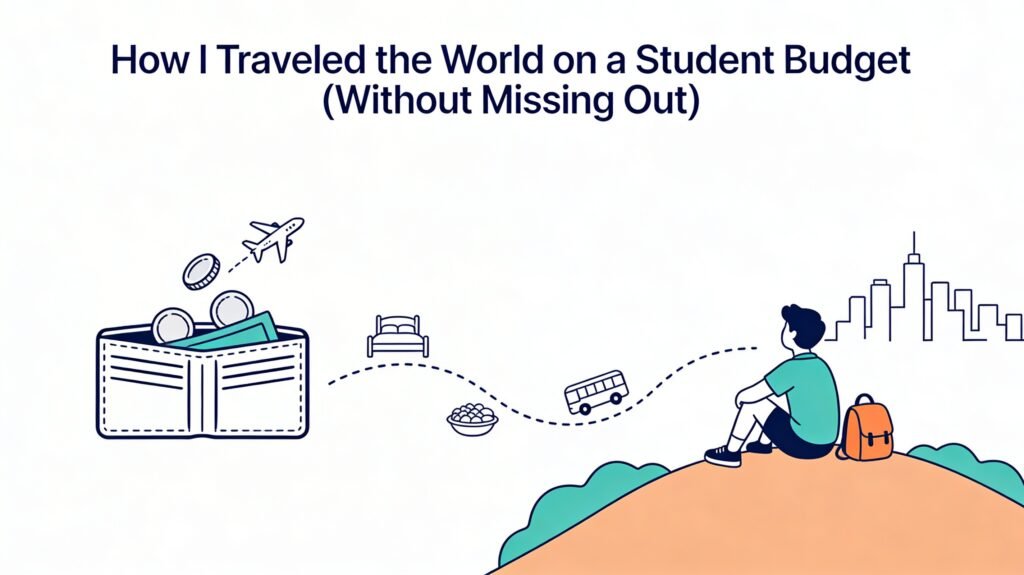
For a long time, traveling the world as a student felt completely out of reach to me. I assumed international trips were only for people with full‑time salaries, big savings, and plenty of free time. But I eventually learned that you don’t need luxury hotels or endless cash to see the world. With the right mindset, smart planning, and a bit of flexibility, traveling on a student budget can actually become one of the most meaningful ways to explore new places.
The first change happened in my mindset. Instead of asking, “Can I afford to travel like everyone else?” I started asking, “How can I travel in a way that fits my reality?” Budget travel doesn’t mean ignoring money; it means being intentional with it. I accepted that I wouldn’t stay in five‑star hotels or eat at expensive restaurants every night, and that was okay. My goal became clear: prioritize experiences, not appearances.
Flights were my first big challenge, and they taught me how powerful flexibility can be. When I stopped insisting on one specific destination and date, options opened up. I looked for cheap destinations within my time window, used flexible date tools, and grabbed deals on budget airlines. Sometimes that meant flying midweek or landing in a nearby city and taking a bus or train the rest of the way. It wasn’t always convenient, but it was affordable—and it still got me to the places I wanted to see.
Accommodation was another major area where I had to think differently. If I’d relied on private hotels, I would have blown my budget in a week. Instead, I stayed in hostels, budget guesthouses, and simple shared apartments. At first, the idea of dorm rooms felt uncomfortable, but they became one of the best parts of my travels. I met other students, traded tips, joined group outings, and often split costs on food, taxis, or tours. When I needed quiet or privacy, I booked a budget private room or a smaller hostel for a night or two to recharge.
I also learned that “not missing out” doesn’t mean paying for every tour or attraction. In nearly every destination, there are expensive, must‑see activities—but there are also countless free or low‑cost experiences: walking tours, public viewpoints, local markets, free museum days, parks, and beaches. I chose one or two paid experiences that really mattered to me in each place, like a special museum or a day trip, and built the rest of my itinerary around affordable activities. Many of my favorite memories—sunsets on a hill, exploring old neighborhoods, watching street performances—cost nothing at all.
Food is another easy way to lose control of your budget. I decided early on that I didn’t need every meal to be an event. I set a simple rule: one “special” meal a day, and the rest as budget‑friendly as possible. That meant grocery store breakfasts, market snacks, and street food lunches, with a nicer dinner here and there—or the other way around, depending on local prices. Eating where locals ate, not just in tourist restaurants, helped me save money and experience more authentic food.
On the ground, transportation can quietly drain your wallet if you’re not careful. I walked whenever it was safe and reasonable, used buses, trams, and metro lines, and grouped activities by area so I wasn’t criss‑crossing the city all day. Weekly transit passes or student discounts often made public transport even cheaper. Walking became one of my favorite parts of travel because it helped me notice details I would have missed from the back seat of a taxi.
Behind the scenes, I treated my budget like part of the adventure instead of a burden. Before each trip, I set a realistic daily spending target based on the destination’s cost of living, then tracked my expenses in a simple note app: accommodation, food, transport, activities, extras. If I had an expensive day, I balanced it with a cheaper one. This kept me from panicking halfway through the trip and let me enjoy experiences guilt‑free because I knew they fit my plan.
Most of all, traveling on a student budget taught me that value isn’t measured in how much you spend but in how fully you experience a place. Some of my richest moments were the cheapest ones: laughing with new friends in a hostel kitchen, journaling on a crowded train, watching locals celebrate in a public square, or sharing a simple home‑cooked meal. You don’t need a huge budget to create huge memories. You need flexibility, intention, and the willingness to travel differently.