Physical Address
304 North Cardinal St.
Dorchester Center, MA 02124
Physical Address
304 North Cardinal St.
Dorchester Center, MA 02124

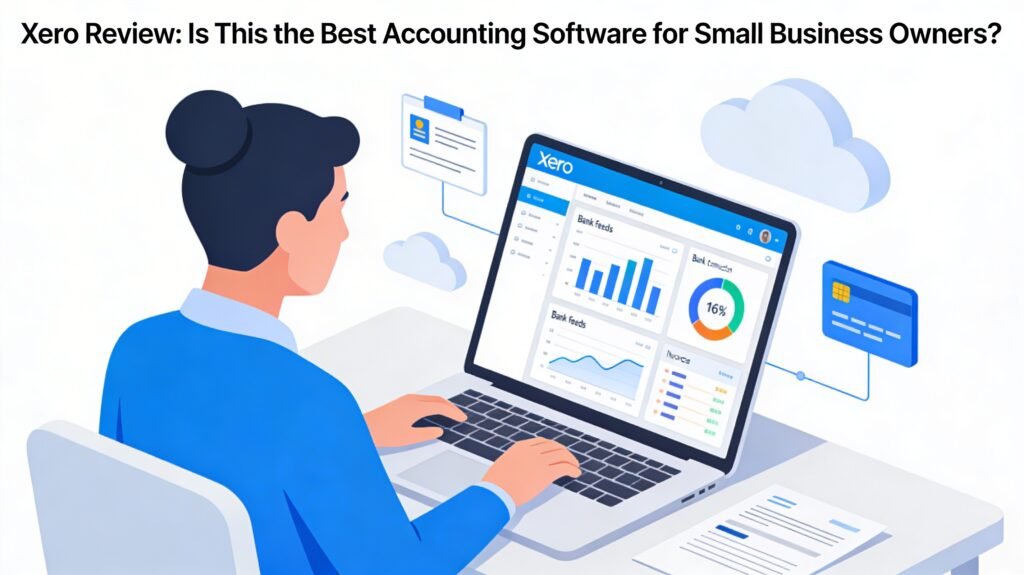
Xero is a cloud-based accounting software built for small and mid-sized businesses that want more than simple invoicing or spreadsheets. It gives business owners one place to manage bookkeeping, invoices, bills, reports, bank feeds, and expenses. Because it is online, you can access it from anywhere, which is useful for busy owners who want to check finances on a laptop or phone. Xero is especially appealing for growing businesses, agencies, contractors, ecommerce sellers, and service companies that need reliable accounting tools without making the system feel too technical or overwhelming.
One of the biggest reasons Xero stands out is that it balances strong accounting features with a clean and user-friendly design. Many small business owners want software that helps them stay organized without feeling like they need to be accountants. Xero does a good job of making daily tasks easier, such as sending invoices, reviewing bills, checking cash flow, and reconciling bank transactions. The dashboard is simple to understand, and the software is designed to reduce manual work. This makes it attractive for owners who want better control of their finances while saving time every week.
Xero includes most of the key accounting tools a small business needs to run smoothly. You can connect bank accounts, import transactions, reconcile payments, create professional invoices, manage bills, and run important reports such as profit and loss statements or balance sheets. The software also offers expense tracking, receipt capture, mileage logging, and project-based cost tracking in certain plans. As a business grows, Xero can grow with it by offering tools like built-in inventory, multi-currency support, deeper analytics, and a wide range of integrations through its app marketplace. This makes it more flexible than many basic bookkeeping tools.
Xero offers different subscription levels depending on the size and needs of the business. The lower plan is usually best for freelancers or very small businesses with only a few invoices and bills each month. The mid-level plan is often the most practical choice because it removes many of those limits and gives small businesses more room to operate normally. Higher plans add advanced tools like expenses and multi-currency support. One of Xero’s strongest pricing advantages is that it allows unlimited users, which can save money for businesses with partners, staff, or outside accountants who all need access.
The feature that makes Xero especially attractive is unlimited users on every plan. Many competitors charge extra per user, which can become expensive as a business grows. Xero also saves time through automation. Bank feeds, recurring invoices, automatic payment reminders, suggested transaction matches, and bank rules can make bookkeeping much faster and less stressful. Another major benefit is the large integration marketplace, which lets users connect payroll, ecommerce, payments, customer management tools, and other business apps. For companies that want one accounting system connected to the rest of their workflow, Xero offers a lot of flexibility.
Even though Xero is strong overall, it is not perfect for every business. Some owners may find the entry-level plan too limited if they send more than a small number of invoices or bills each month. There can also be a learning curve for beginners who are completely new to accounting concepts like reconciliation, reports, or chart of accounts. In addition, some advanced functions require add-ons or outside apps, which can increase total monthly costs. For very simple freelancers or tiny operations, a lighter invoicing platform may be enough, especially if they do not need full accounting depth.
When compared with other popular platforms, Xero performs very well for businesses that want strong accounting features and team access. QuickBooks is also a major option and is often seen as an industry standard, but it can become more expensive when extra users are added. FreshBooks is simpler and works well for solo freelancers or service providers, but it is usually more limited as a full accounting platform. Xero fits nicely in the middle by offering deep bookkeeping tools, strong automation, and unlimited users, which gives it an edge for growing businesses that want good value and room to expand.
Xero is one of the best accounting software options for small business owners who want modern, flexible, and cloud-based bookkeeping. It is particularly strong for businesses that need multiple users, solid reporting, automation, and app integrations without paying extra for every team member. While it may not be the cheapest option for the smallest businesses, it offers excellent value for companies that are growing and need more than a basic invoicing tool. For many small business owners, Xero is a smart long-term accounting solution that can save time, improve financial visibility, and support growth.