Physical Address
304 North Cardinal St.
Dorchester Center, MA 02124
Physical Address
304 North Cardinal St.
Dorchester Center, MA 02124

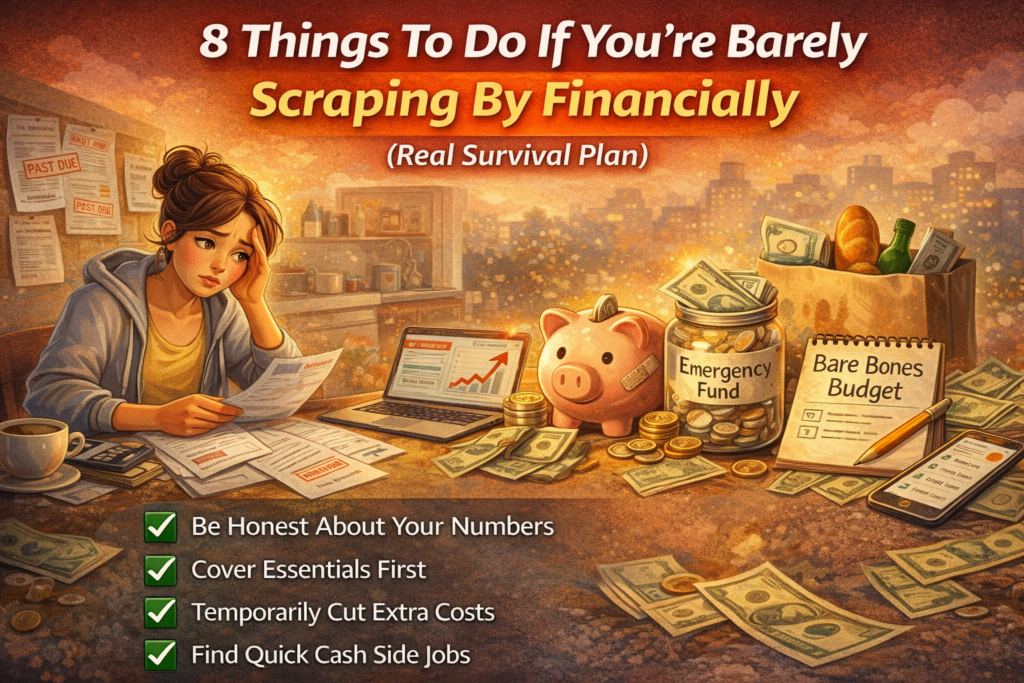
8 Things To Do If You’re Barely Scraping By Financially (Real Survival Plan)
When you’re barely scraping by financially, even small expenses can feel overwhelming. It’s not a failure—it simply means you need a clear, practical plan to stabilize your situation. Instead of focusing on long-term wealth strategies, the goal is to take immediate steps that help you survive, reduce stress, and slowly rebuild control over your finances.
The first and most important step is to get honest about your numbers. Avoiding your bank account only increases anxiety. Take time to list your income, fixed bills, and daily spending. This doesn’t need to be perfect—it just needs to be real. Once you understand exactly where your money is going, you can start making better decisions based on facts rather than fear.
Next, focus on covering your essential expenses first. These include housing, food, utilities, transportation, and minimum debt payments. Think of these as your “survival priorities.” Everything else—subscriptions, shopping, and non-essential services—comes after. This approach ensures you stay safe, housed, and able to work.
Cutting expenses is necessary, but it should be done strategically. Instead of removing everything permanently, look for costs you can pause temporarily. Cancel unused subscriptions, reduce takeout spending, and eliminate small daily purchases that add up. Even saving $50 to $100 per month can create breathing room during tough times.
If you’re struggling with bills, communication is key. Contact your lenders, utility providers, or service companies early. Many offer hardship programs, payment plans, or temporary relief options. Being proactive can prevent late fees, collections, and long-term damage to your finances.
Increasing your income, even slightly, can make a huge difference. Focus on quick and simple ways to earn money, such as gig work, selling unused items, or picking up extra hours. These may not be permanent solutions, but they can help you catch up on bills and reduce financial pressure.
Building a small emergency buffer is also important. Even saving a small amount—like $5 or $10 at a time—can help you avoid falling into deeper debt when unexpected expenses arise. The goal isn’t to save thousands immediately, but to create a habit that protects you over time.
Creating a bare-bones budget can give you a clear survival plan. This is a simplified version of your spending that only includes essentials. Having this plan ready helps you stay calm and focused if your income drops or expenses increase unexpectedly.
Finally, don’t hesitate to ask for help. Community resources, food programs, and financial assistance services exist for situations like this. Using them is not a sign of weakness—it’s a smart way to stabilize your situation while you work toward improvement.
In conclusion, being financially stretched is exhausting, but it doesn’t have to last forever. By focusing on essentials, cutting costs, increasing income, and taking small consistent actions, you can move from survival mode toward stability. The key is to start with one step at a time and build momentum gradually.