Physical Address
304 North Cardinal St.
Dorchester Center, MA 02124
Physical Address
304 North Cardinal St.
Dorchester Center, MA 02124
Choosing the right bank as a young adult in 2026 is one of the smartest financial decisions you can make. With rising living costs and a fast-changing digital economy, your bank is no longer just a place to store money—it’s a tool that should actively help you manage, save, and grow your finances. The key is to focus on practical features that simplify your life, reduce unnecessary fees, and give you better control over your spending habits.
The most important step is understanding what you actually need from a bank. Young adults should prioritize accounts with little to no monthly fees, low overdraft charges, and strong mobile apps that allow you to manage everything from your phone. Easy ATM access and fast online account setup are also essential. A good bank should match your lifestyle—whether you are working, studying, traveling, or managing multiple income sources. Instead of choosing a bank based on branding, focus on how it fits your daily financial behavior.
There are several types of banks to consider, and each offers different advantages. Traditional banks provide in-person services and are helpful if you handle cash often. Online-only banks usually offer lower fees, higher interest rates, and modern features, making them ideal for digital users. Credit unions, on the other hand, often deliver better customer service and lower costs due to their member-owned structure. Many young adults benefit from combining options—for example, using an online bank for everyday spending and a separate savings account for long-term goals.
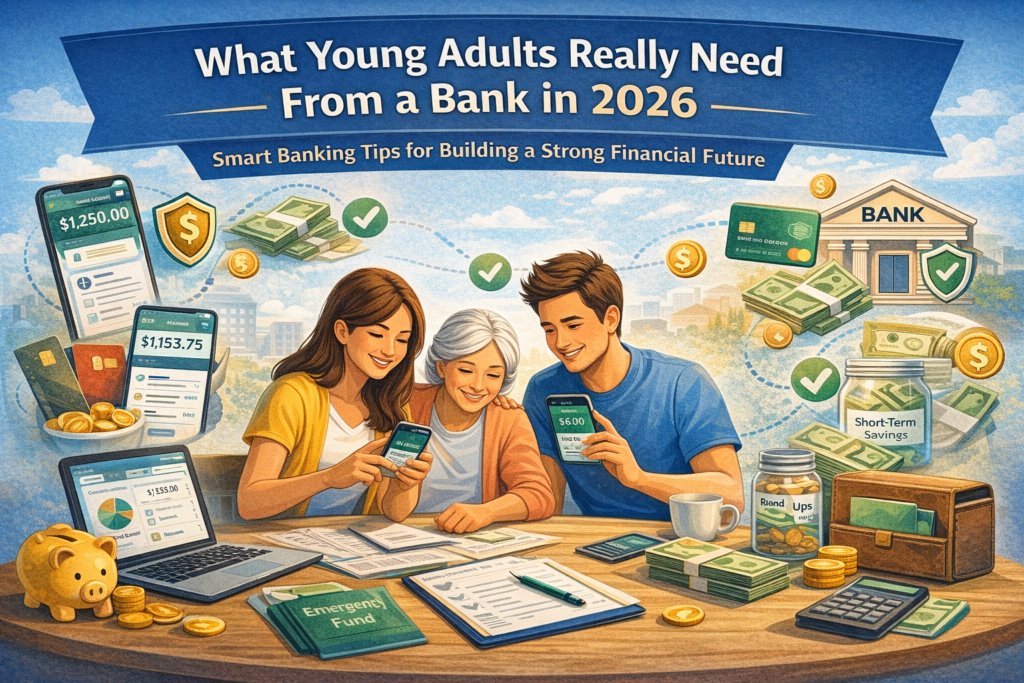
Setting up your accounts properly is just as important as choosing the bank itself. Instead of keeping all your money in one place, organize it into different categories. A main checking account can handle your income and daily expenses, while separate savings accounts can be used for short-term goals and emergencies. Many banks now offer “buckets” or sub-accounts that make this process simple and visual. Automating transfers—especially right after payday—helps you save consistently without relying on discipline alone.
Modern digital tools make managing money easier than ever. Features like real-time alerts, spending breakdowns, and savings trackers give you a clear view of your finances. Some banks also offer round-up savings, where small amounts from purchases are automatically saved. These tools turn your bank into a financial assistant, helping you stay organized and avoid overspending. Even if your bank lacks certain features, you can connect it to budgeting apps for a more complete financial overview.
Avoiding fees is another critical part of building financial stability. Many bank charges—such as maintenance fees, overdraft penalties, and ATM fees—can be avoided with the right setup. Choose accounts with no fees, enable balance alerts, and always pay credit card bills on time. Even if you are charged occasionally, contacting your bank can sometimes result in a refund. Small savings from avoiding fees can add up significantly over time.
Finally, banking plays a major role in building your credit history. A simple credit card used responsibly can help you establish a strong credit score, which is essential for future goals like renting an apartment or getting a loan. Use your card for small expenses, pay the balance in full each month, and keep your usage low. If you are new to credit, secured cards are a safe way to start.
In conclusion, the best bank for young adults in 2026 is one that aligns with your lifestyle, minimizes costs, and supports your financial growth. By choosing wisely, organizing your accounts, and using digital tools effectively, you can take full control of your money and build a strong financial future.